
3D Printed Microfluidic Probe.
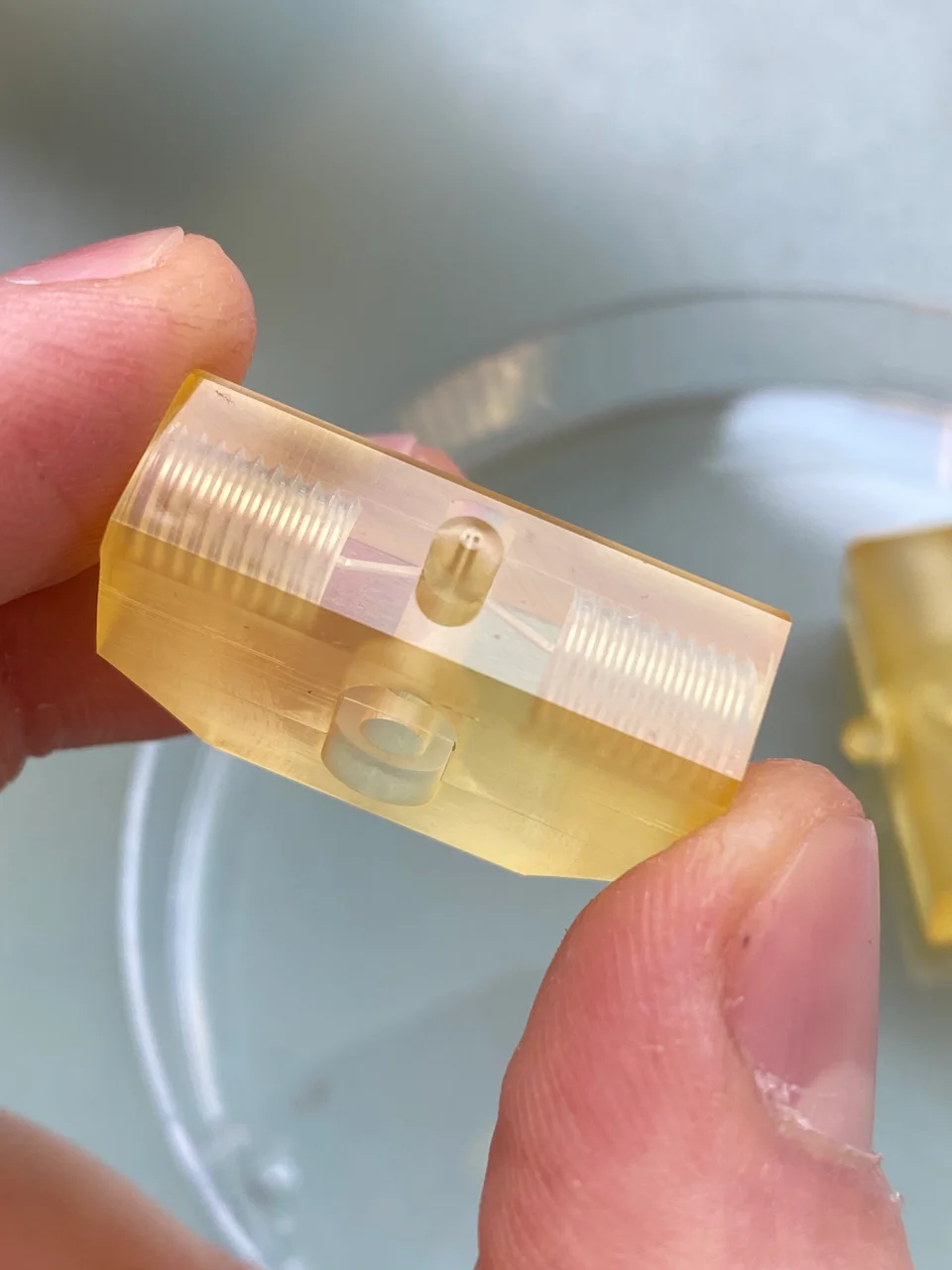
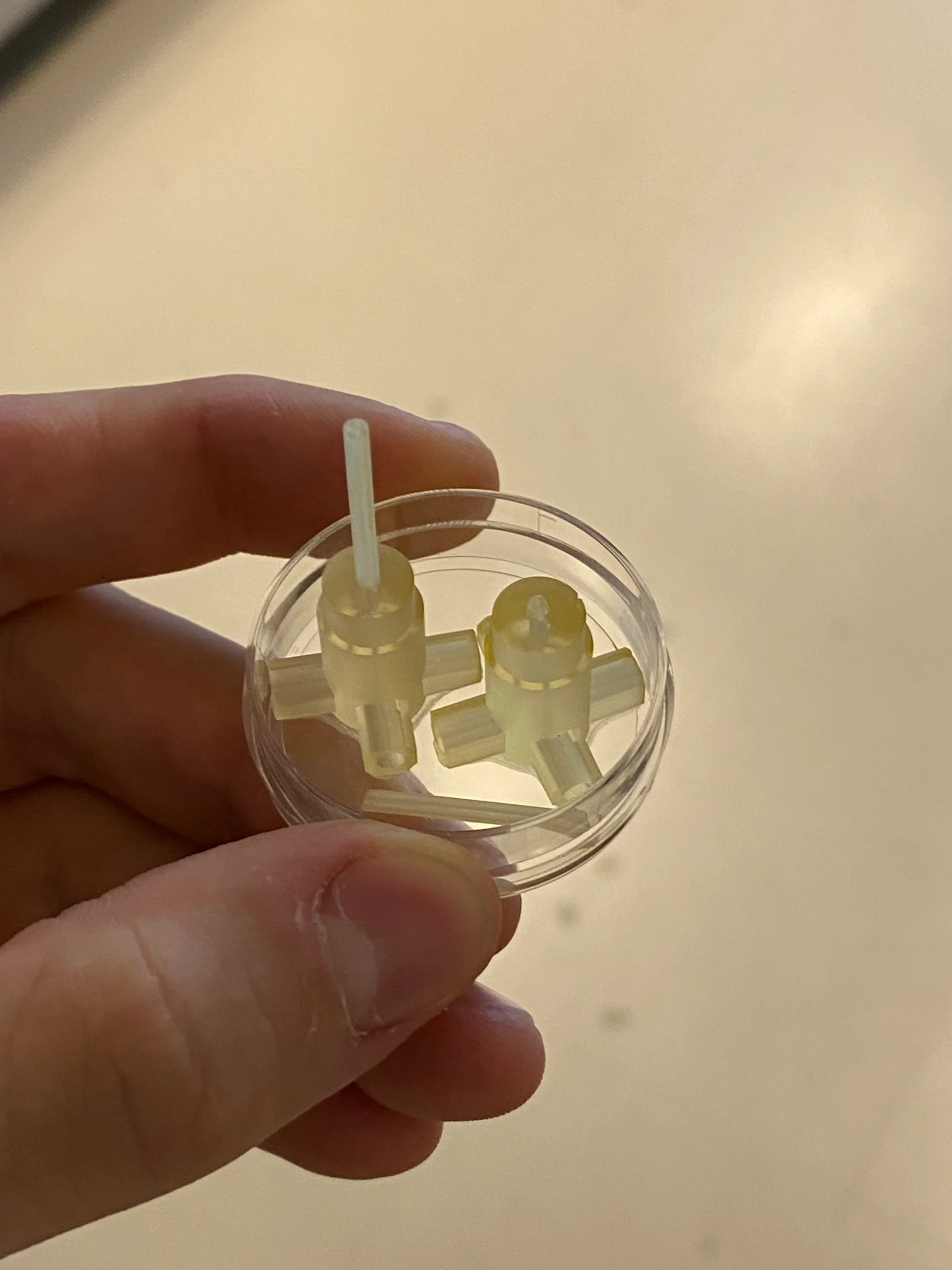
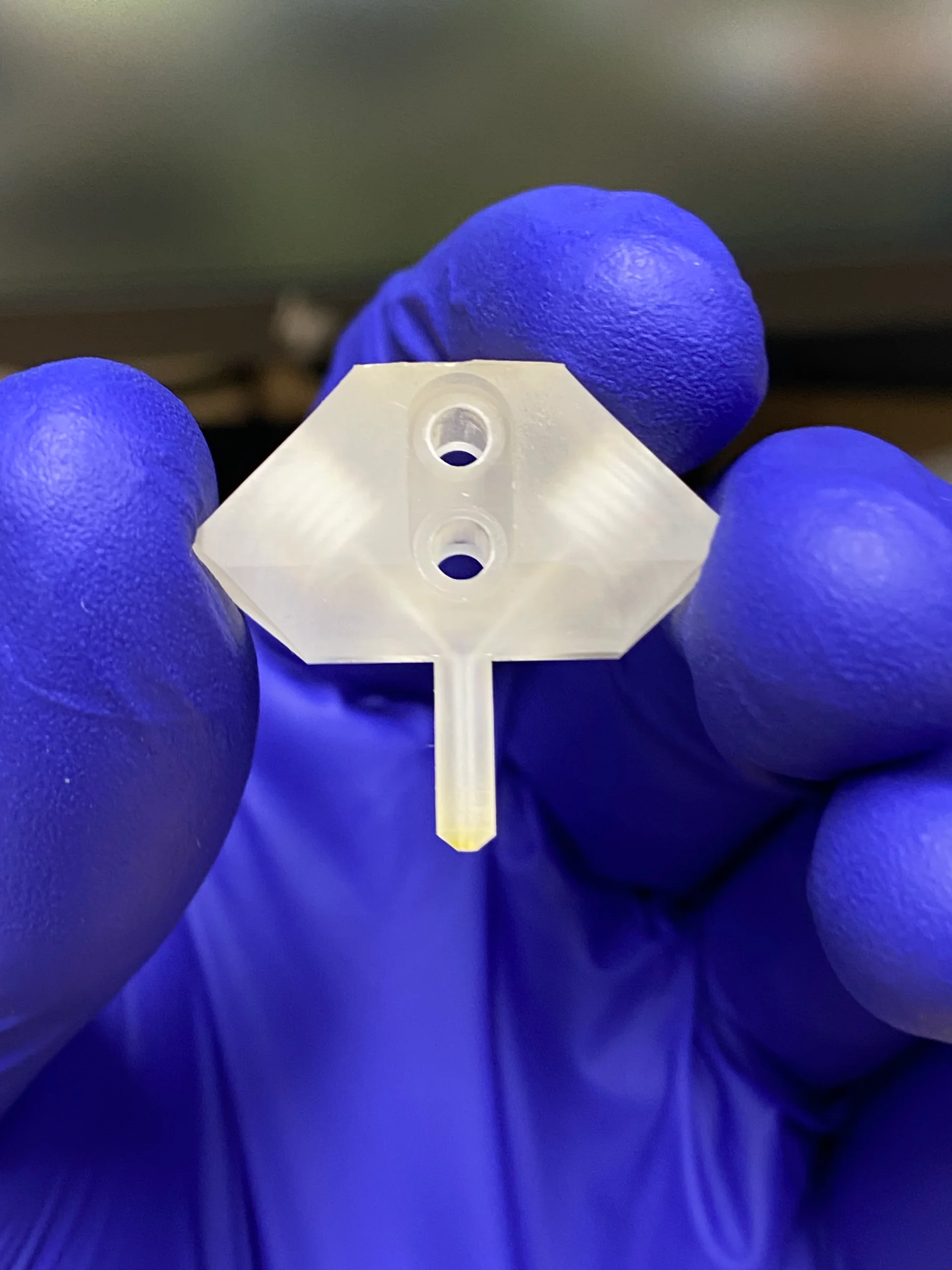
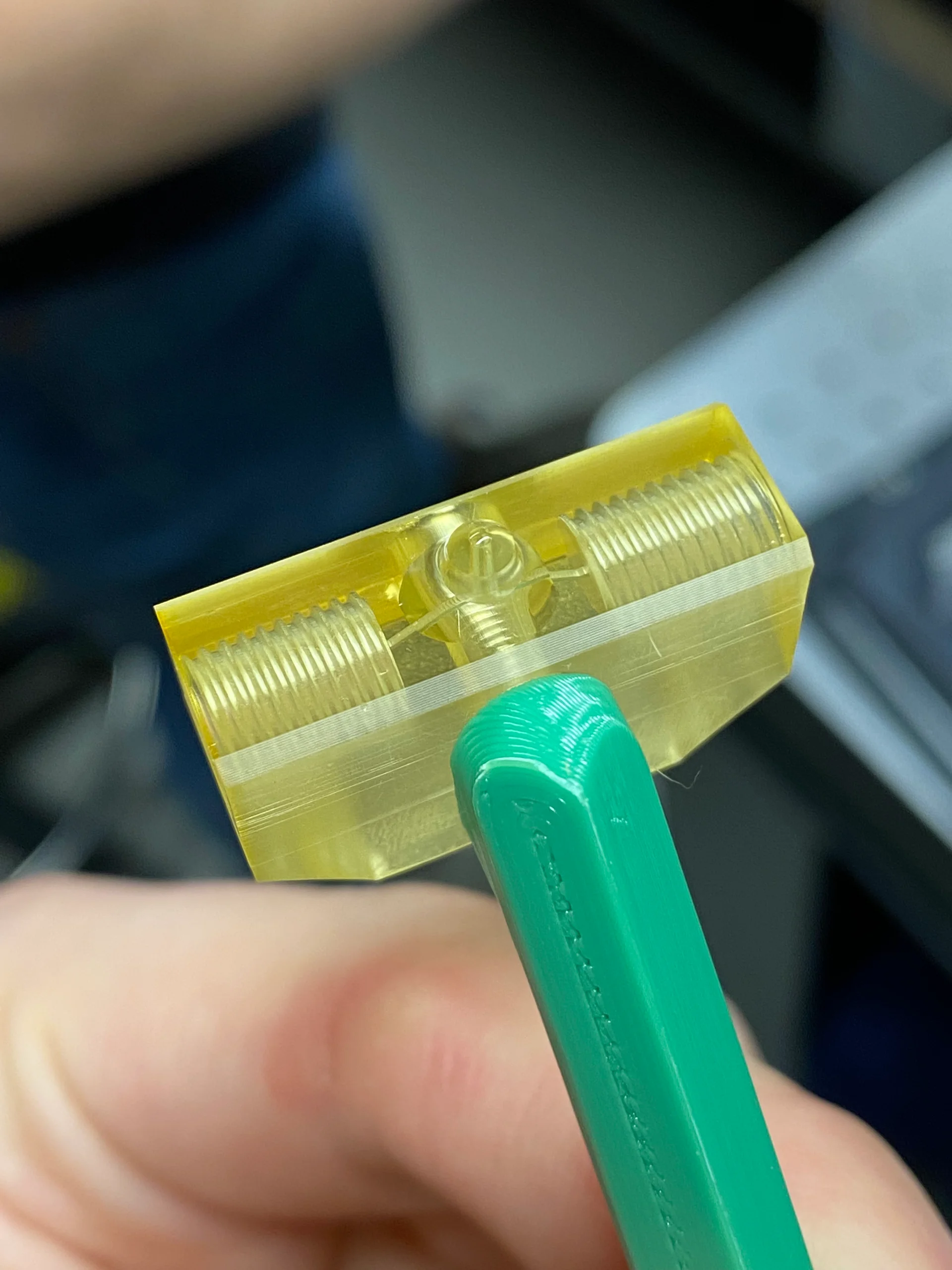
A 3D-printed probe for bringing controlled microfluidic flow to a small region of a surface.
On this page01Overview
Microfluidics brought to the sample.
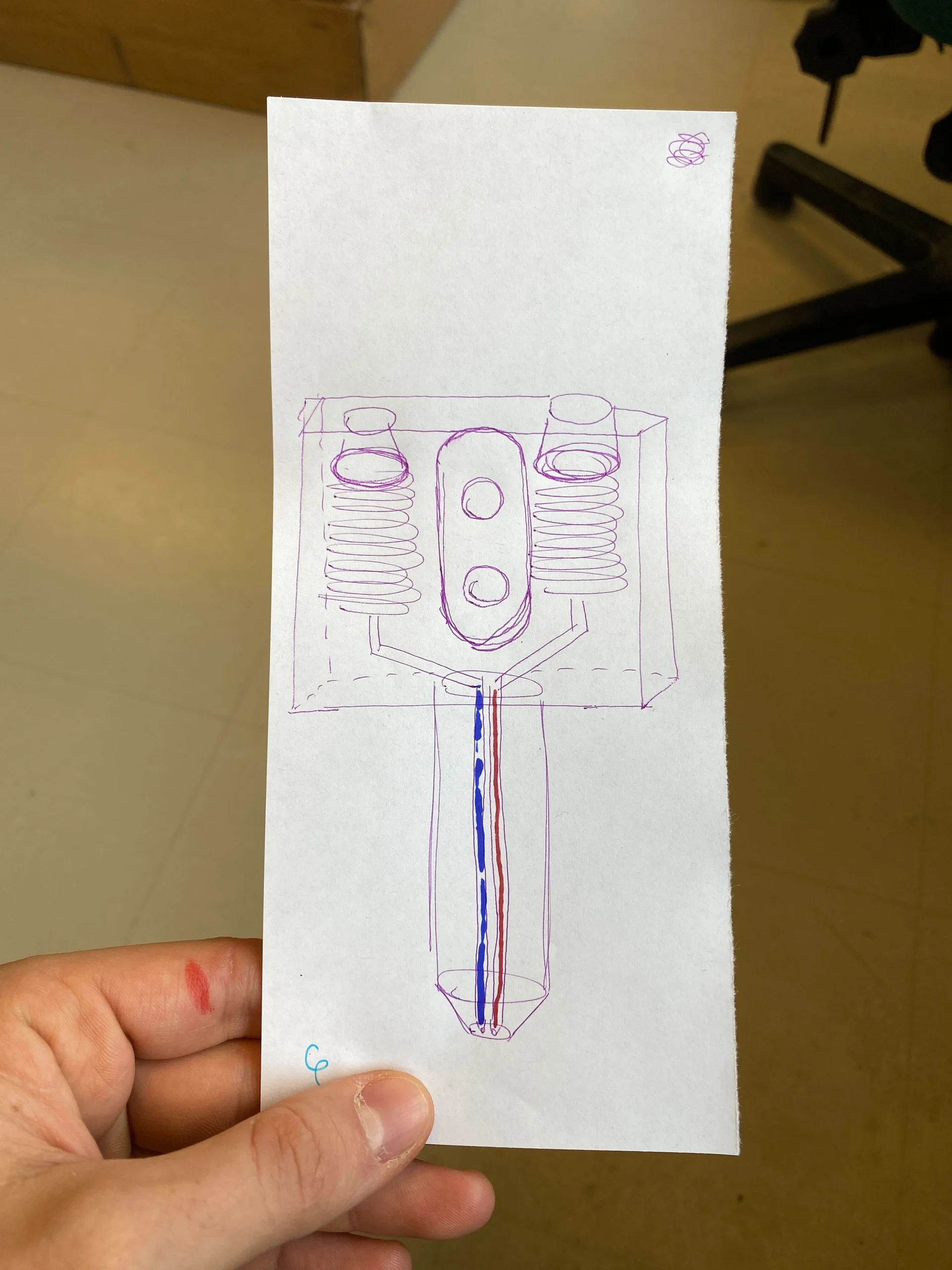
A microfluidic probe brings a small stream of liquid to a sample rather than enclosing the sample inside a channel. In hydrodynamic flow confinement, one opening delivers liquid while a nearby opening withdraws it, keeping the treatment concentrated in a small area of an immersed surface.
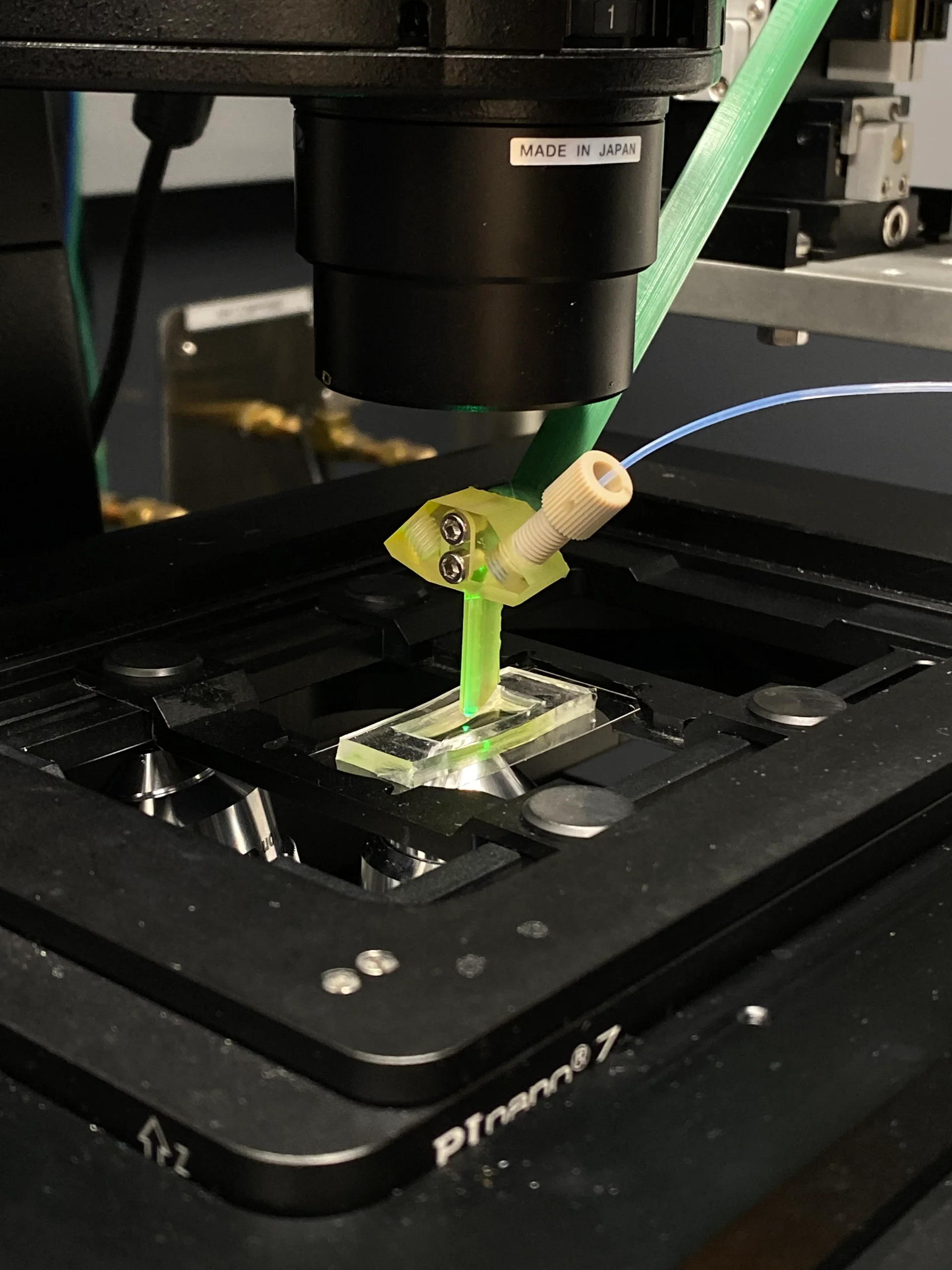
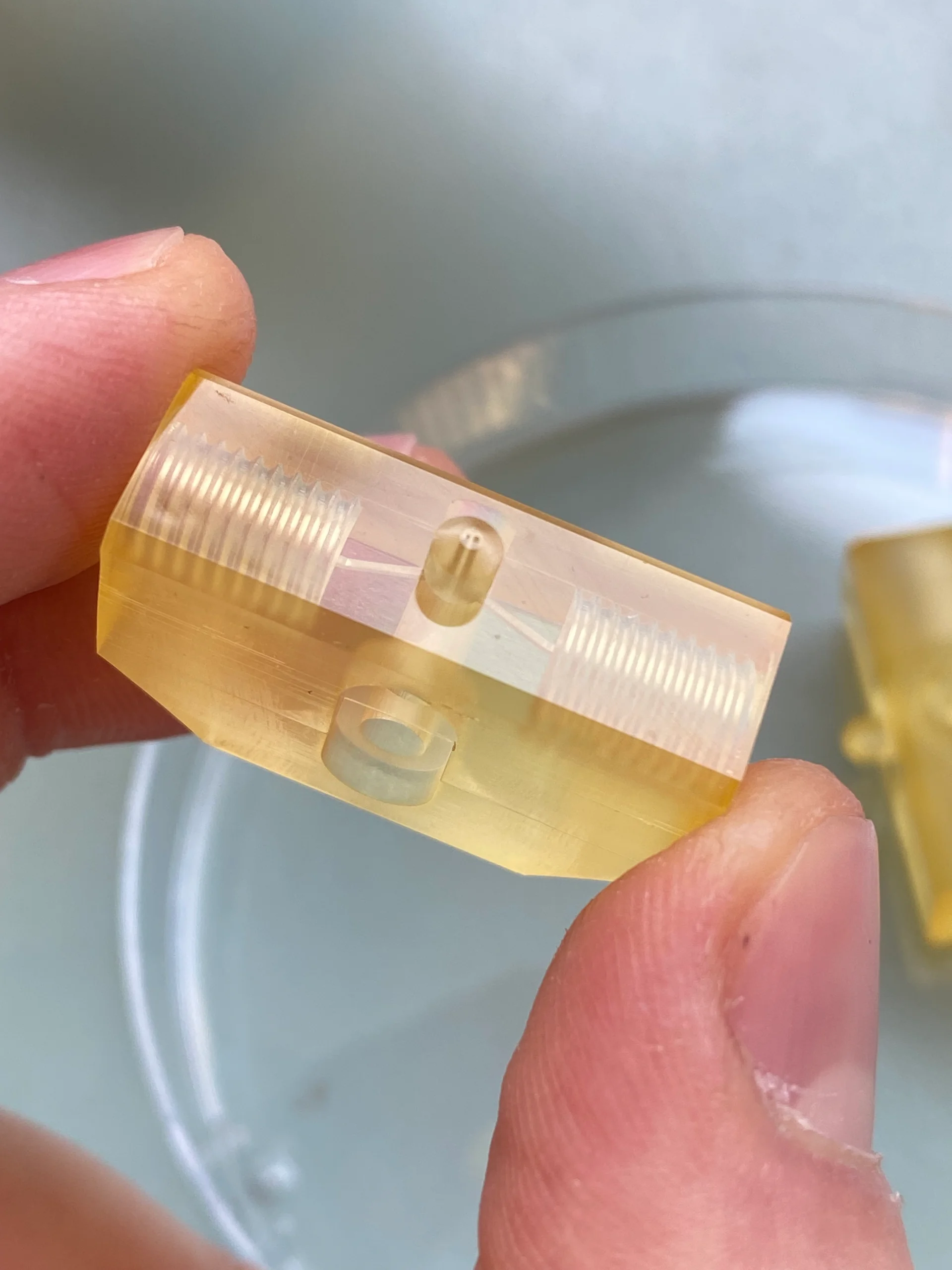
This project explores a 3D-printed implementation of that idea, with fluidic connections and a microscope-based setup for positioning the probe above a sample. The probe-to-surface gap and the balance between delivery and aspiration are central to controlling where the liquid acts.
Patterning surfaces. Sampling locally.
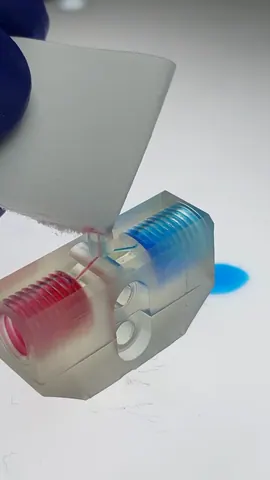
One use is surface patterning: depositing proteins or other reagents as spots, lines, or gradients by moving the probe across a substrate. The same approach can expose selected cells or regions of a tissue section to a reagent while leaving neighbouring areas in the surrounding liquid.
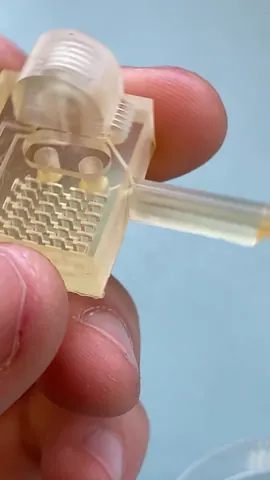
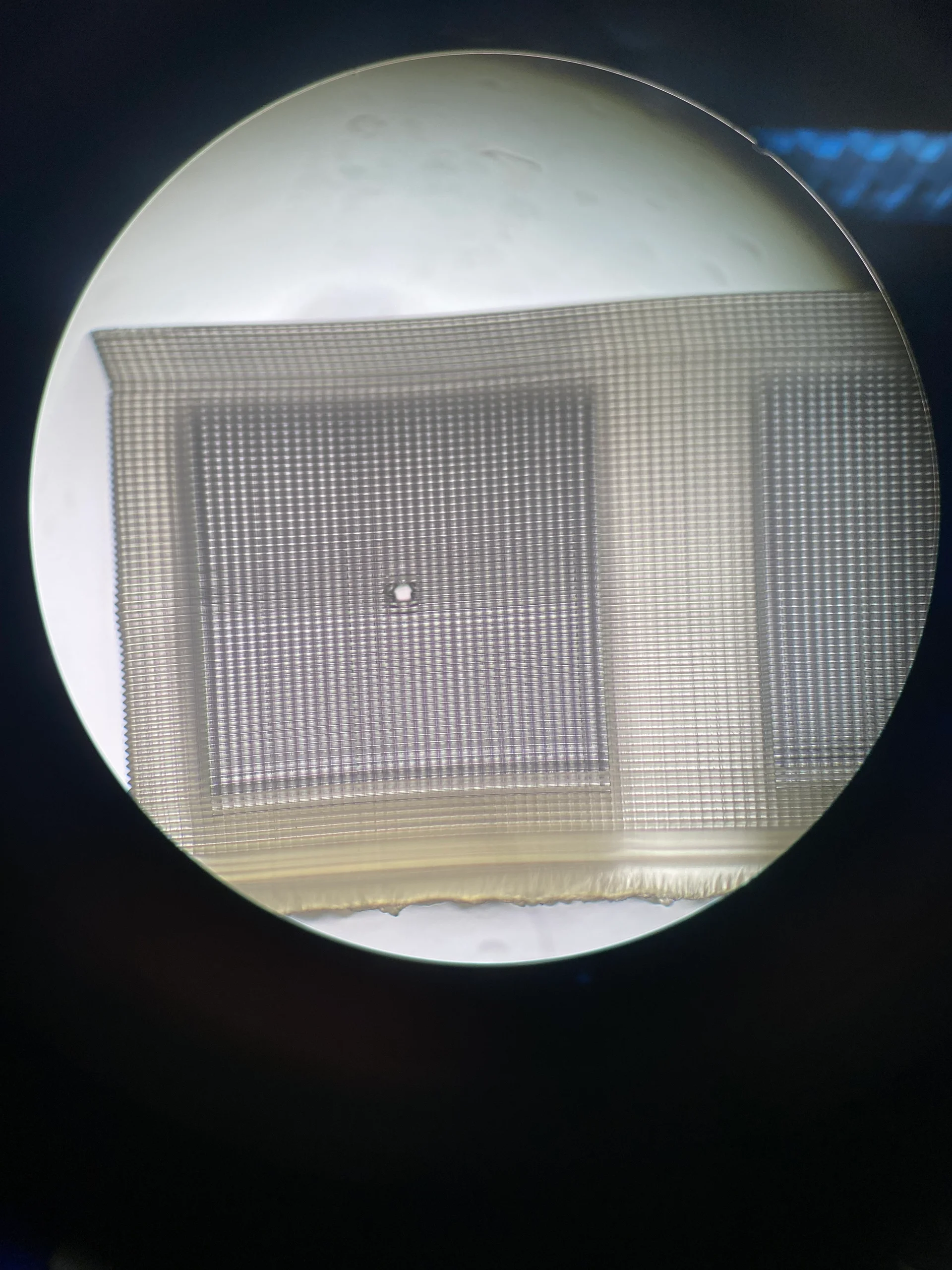
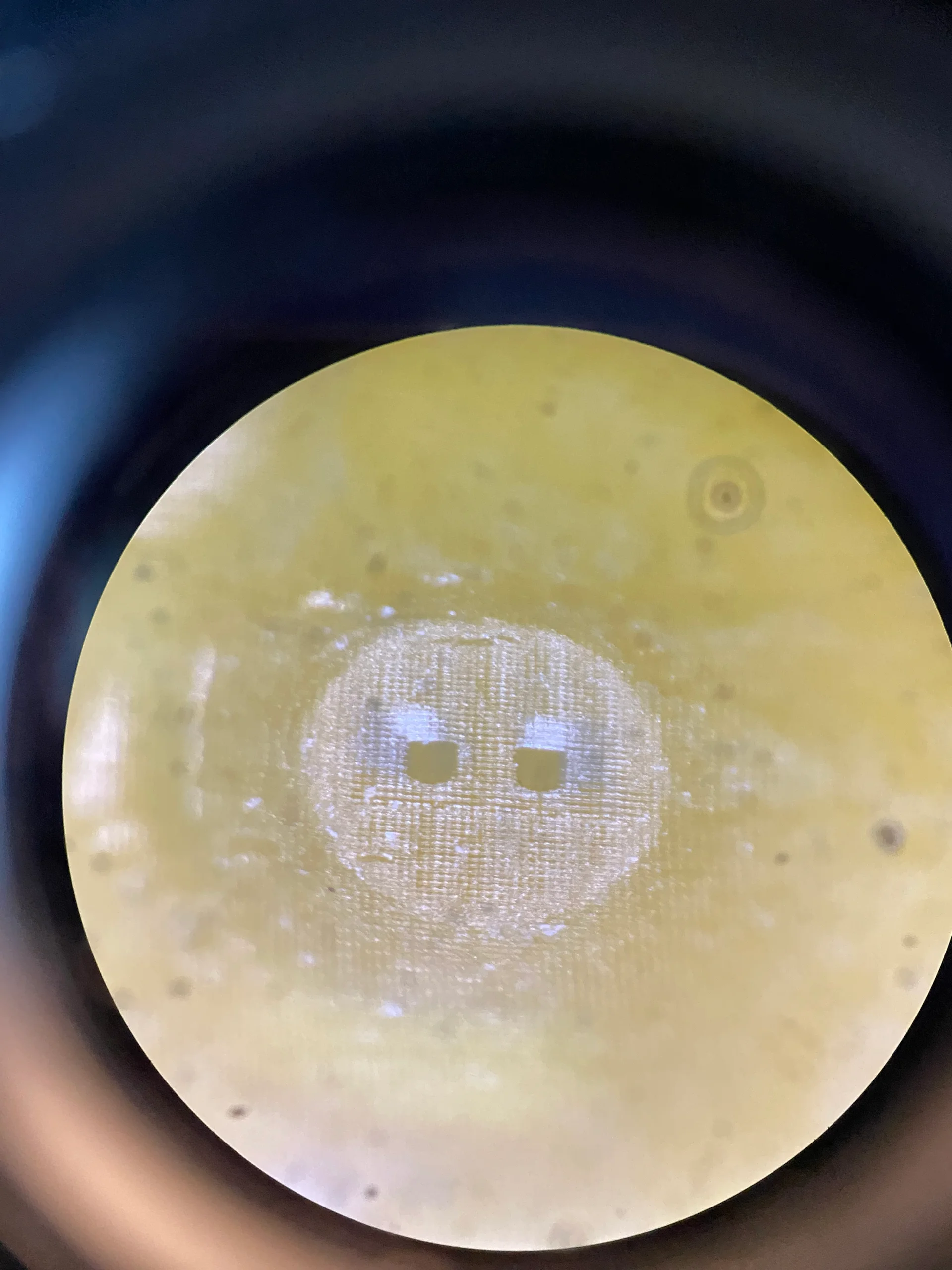
We produced a probe with single-pixel pores, giving pore diameters of approximately 30 µm. We also explored integrated mixers to prepare mixtures within the probe before depositing them on a surface.
Local analyte sampling is another potential use. Liquid can collect molecules from a selected area and carry them away for analysis, preserving information about where the sample came from. Related microfluidic probes have coupled local extraction to mass spectrometry; a printed probe could offer a practical route to exploring such spatially targeted sampling.
The complete project archive.
Scroll or swipe to explore. Select a photo to enlarge it, or a play-marked video to watch.